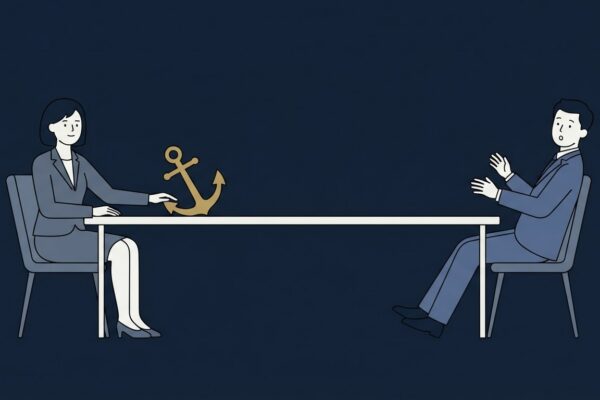
Work-life balance in a team often comes down to when its leader sends email. Eight experiments found that people receiving late messages overestimate how quickly the sender expects a reply.
Imagine a team leader whose days are booked from morning to evening. So he deals with work email after ten at night, once the children are asleep. He writes briefly: material for a proposal, a question on the budget, a note on next week’s presentation. None of it is urgent. He writes mainly so that he will not forget it by morning.
Replies arrive within ten minutes. One colleague answers at eleven, another at six the next morning, apologising for not getting to it sooner. He takes it as proof of a committed team. Then, at appraisal time, he hears that people are tired and cannot switch off in the evening. He does not understand, because he never asked anyone to reply at night. A month in, one of the new starters asks whether she should keep her phone on at weekends too.
What the recipient assumes
Laura Giurge of London Business School and Vanessa Bohns of Cornell University examined this situation in eight pre-registered experiments with 4,004 participants. They published the results in Organizational Behavior and Human Decision Processes in 2021.1
They found that people receiving a non-urgent email sent outside normal working hours overestimate how quickly the sender expects a reply. The authors call it the email urgency bias. The sender writes on a Saturday or late in the evening and is happy to hear back on Monday. The recipient assumes a reply is wanted now. That gap led to more stress from receiving emails and was associated with lower well-being.1
Continue reading
Read the full article for free
Enter your email and the full article opens straight away. No payment, just a subscription to TORVAKO Insights.
- Full articles with all the sources they draw on
- Once a month, an overview of new articles and one story from practice
- You will be the first to receive TORVAKO study results
Already a subscriber? Enter your email and the article will unlock on this device too.